When most people picture Bali, they imagine sun-drenched beaches, palm-lined shores, and turquoise waves. But tucked into the island’s lush interior — about an hour and a half to two hours from the coast — is Ubud, a place that feels like the true heart of Bali. There’s nothing you have to see here. No checklist to tick off. And yet, almost everything feels worth photographing — from rice terraces cascading down emerald hillsides to temple offerings laid gently on moss-covered steps. Ubud isn’t about sightseeing in the traditional sense; it’s about soaking in the atmosphere and the spirit. As our introduction to Indonesia, it was the perfect starting point.
Bali’s Most Famous Hideaway
It’s no surprise that Eat Pray Love (the 2010 film starring Julia Roberts) chose Ubud as the backdrop – the area practically hums with soul searching. The movie helped catapult Ubud onto the global travel radar, attracting wellness seekers and curious wanderers. And while the town has grown more polished since then (and traffic backups to match) — it hasn’t lost what makes it special.
There’s still a relaxed energy here that hits you almost immediately. Even with the crowds and cafés, Ubud doesn’t feel rushed. You can spend your day doing very little — sipping ginger tea, watching rice paddies shimmer in the heat, or wandering through markets — and still feel like you’ve experienced something meaningful. In spite of our several months of traveling, there’s something that feels a little different!
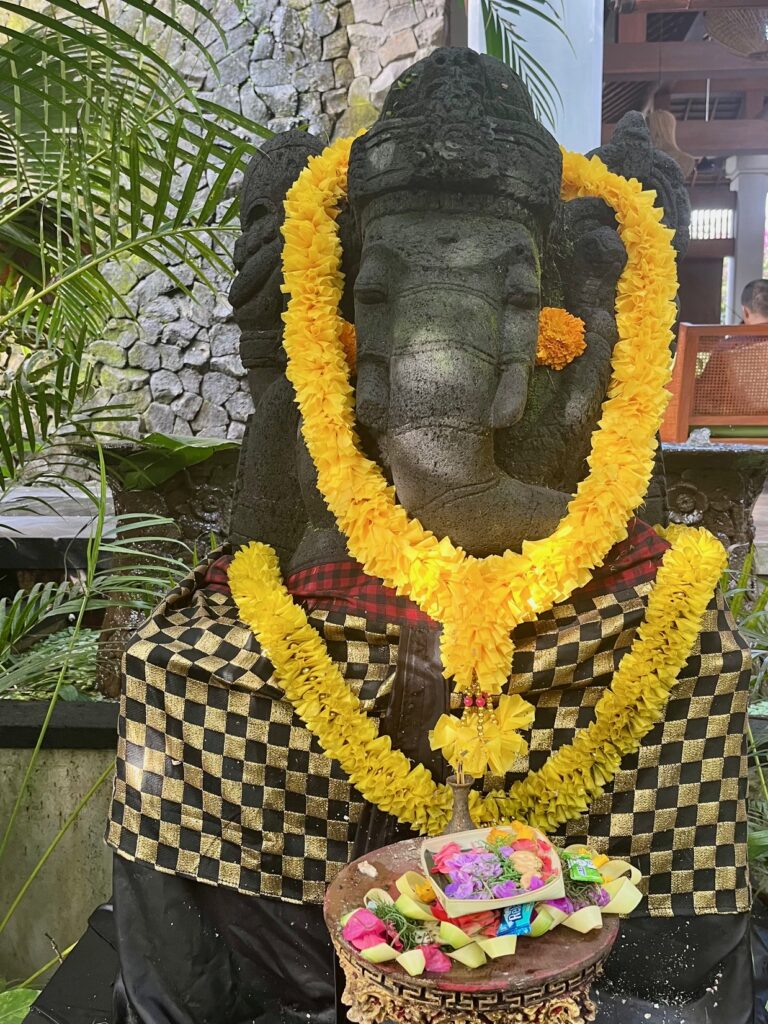
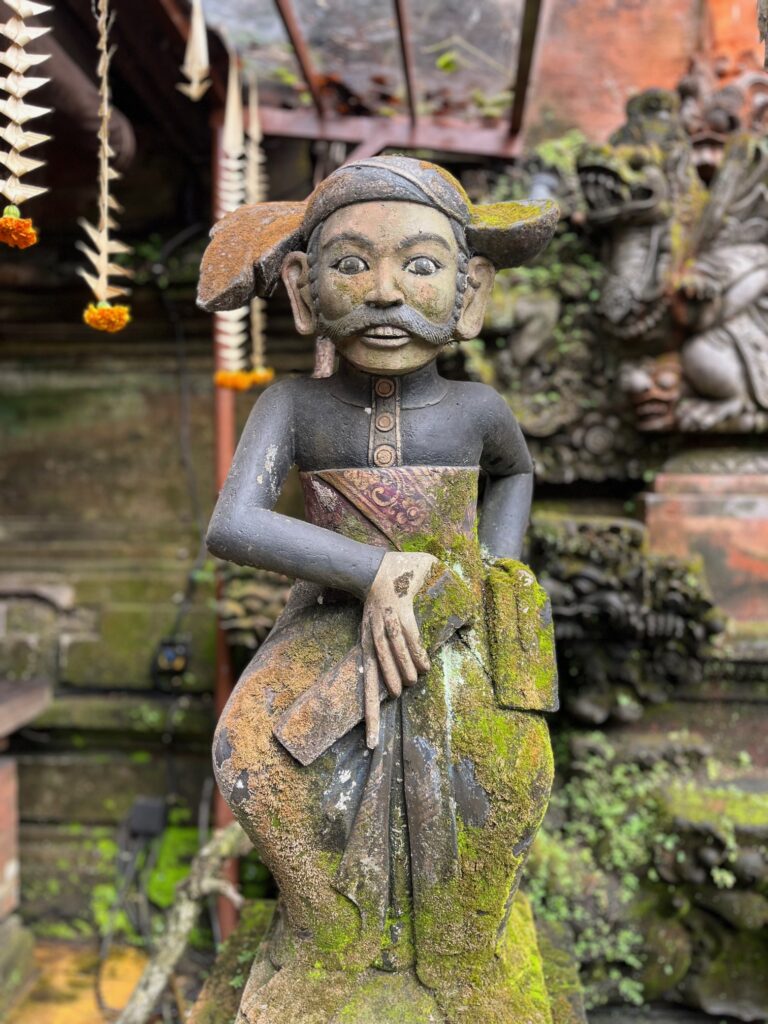
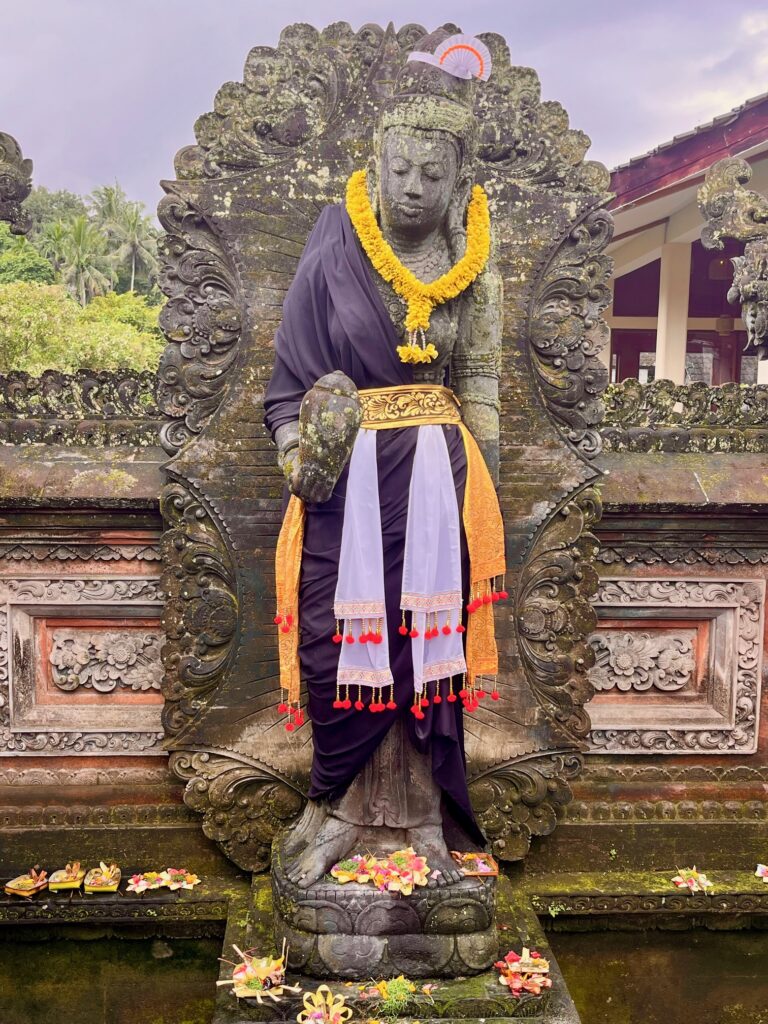
Stone statues draped in checkered cloth and fresh flower offerings are literally everywhere you look
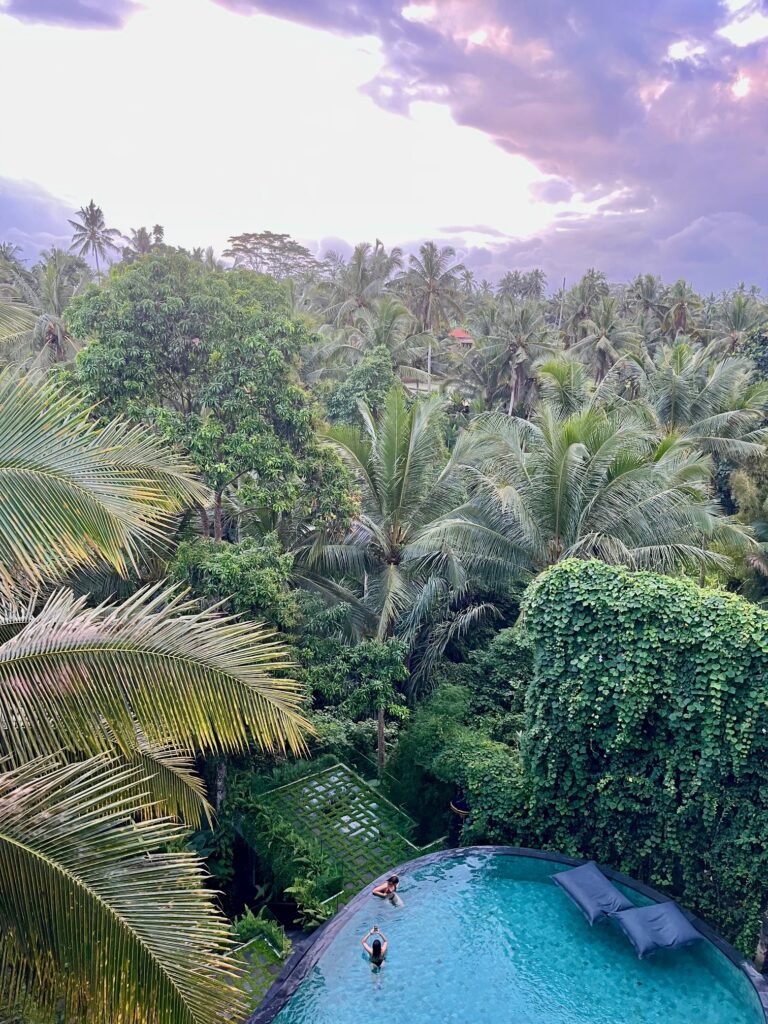
Our hotel backed up to beautiful jungle setting...no normal dip in the pool!
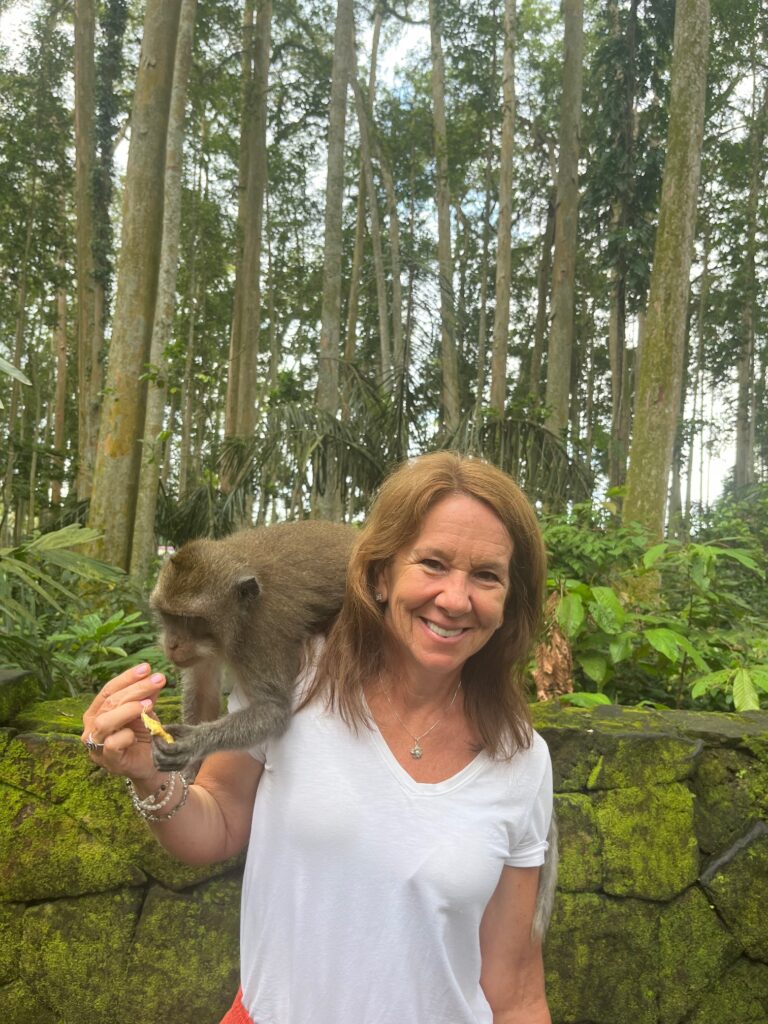
Visited Monkey Park, a beautiful jungle park with wild monkeys. Our guide assisted with my visitor.
Offerings at Your Feet: The Art of Everyday Devotion
One of the first things you’ll notice wandering the streets of Ubud is that the ground itself seems alive with intention. Tiny palm-leaf baskets, called canang sari, are sprinkled quite literally everywhere — on street corners, tucked beside doorways, balanced on motorbikes, and nestled on café steps. You’ll find yourself stepping carefully around them, not out of obligation, but out of respect for the quiet beauty they hold.
These offerings are more than just decorative — they’re spiritual snapshots of daily life. Each one is a small, handcrafted expression of gratitude, typically filled with colorful flower petals, grains of rice, crackers, incense sticks, and sometimes even unexpected items like candy or cigarettes. Every component carries symbolic meaning, and together they honor the balance between good and evil.
I got up early one morning and got to witness first hand the canang saris being placed by locals — most often by women dressed in sarongs and sashes . Watching someone place an offering in the early sun, gently waving incense smoke into the air was definitely a memory I will keep. It adds a sense of reverence to even the simplest stroll through the side streets.
In Ubud, the sacred lives side-by-side with the everyday tourist. And it’s these offerings — humble and everywhere — that quietly remind you: this is not just a place you visit, it’s a place you feel.