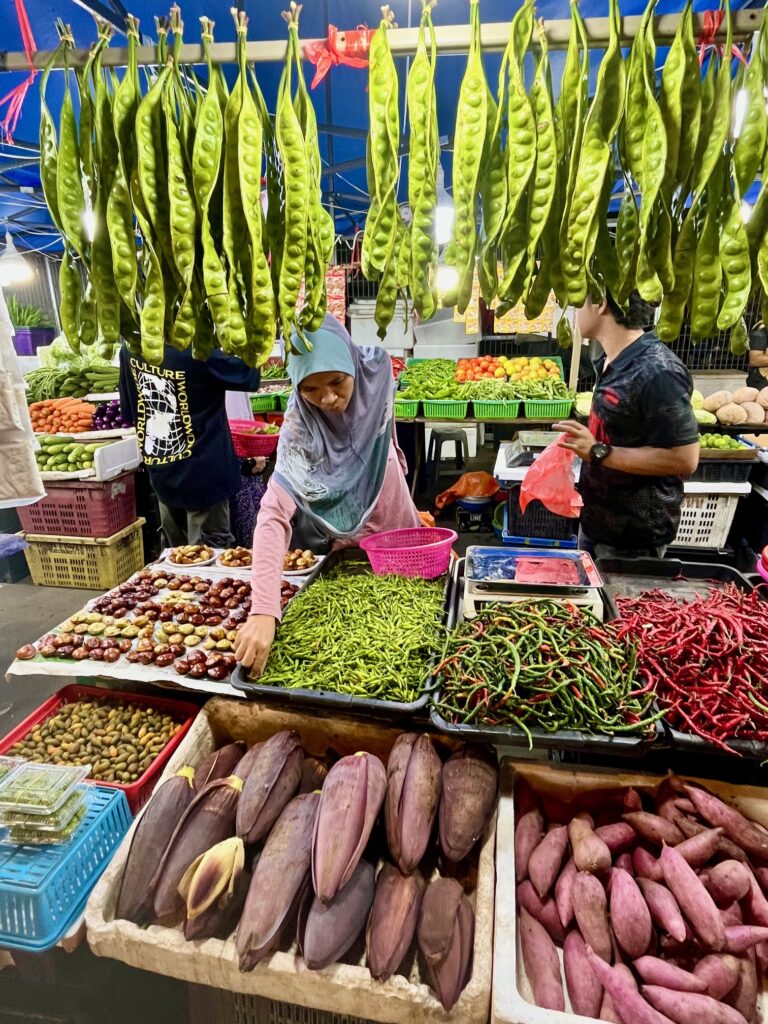
One of the most fun—and delicious—parts of traveling through Southeast Asia has been exploring its vibrant street food scenes. While I haven’t highlighted it much yet, street food has been a constant thread in our journey, offering everything from quick bites on busy corners to full dinner experiences steeped in local tradition. In this part of the world, street food isn’t just about convenience—it’s an essential expression of culture, history, and community.
Kuala Lumpur: A Modern Metropolis with Hidden Flavor
Arriving in Kuala Lumpur, Malaysia’s capital and largest city (with a metro population of over 8 million), I was surprised by how modern and upscale it felt. It was quite a contrast from several of developing countries was have recently visited! The city is dotted with gleaming skyscrapers, sprawling malls, and an excellent transportation system—far more cosmopolitan than I had imagined. But beneath its polished surface lies a deep connection to heritage, especially when it comes to food.
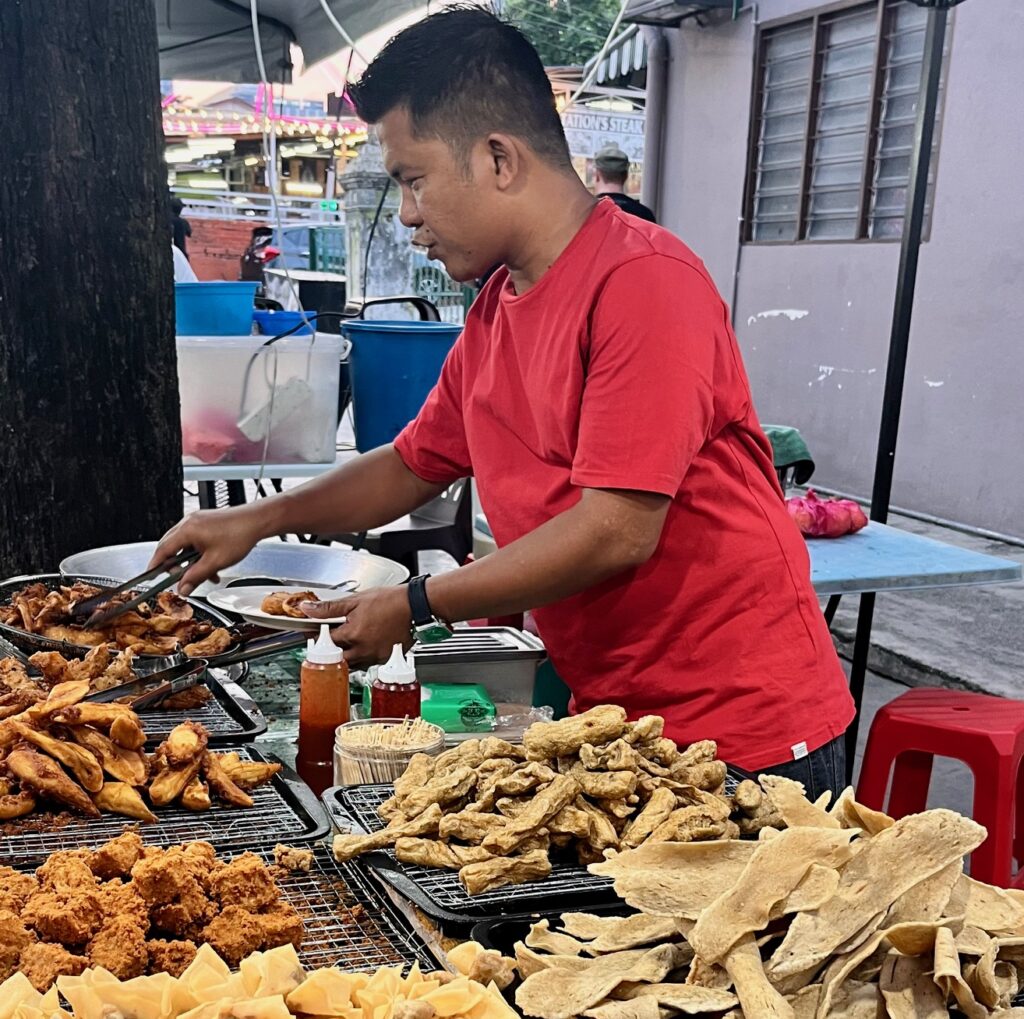
To get a taste of KL’s (that’s how locals refer to their city) culinary roots, we joined an authentic street food tour in Kampung Baru, an older, working-class neighborhood just steps from the iconic Petronas Towers. This area, where over 95% of the residents are locals, feels like stepping into a different world—one with slower rhythms, traditional Malay homes, and time-honored recipes passed down through generations. It’s the kind of place most tourists miss, but where the real heart (and flavor) of the city lives.
A Few of Signature Dishes and Drinks You’ll Find in Kuala Lumpur
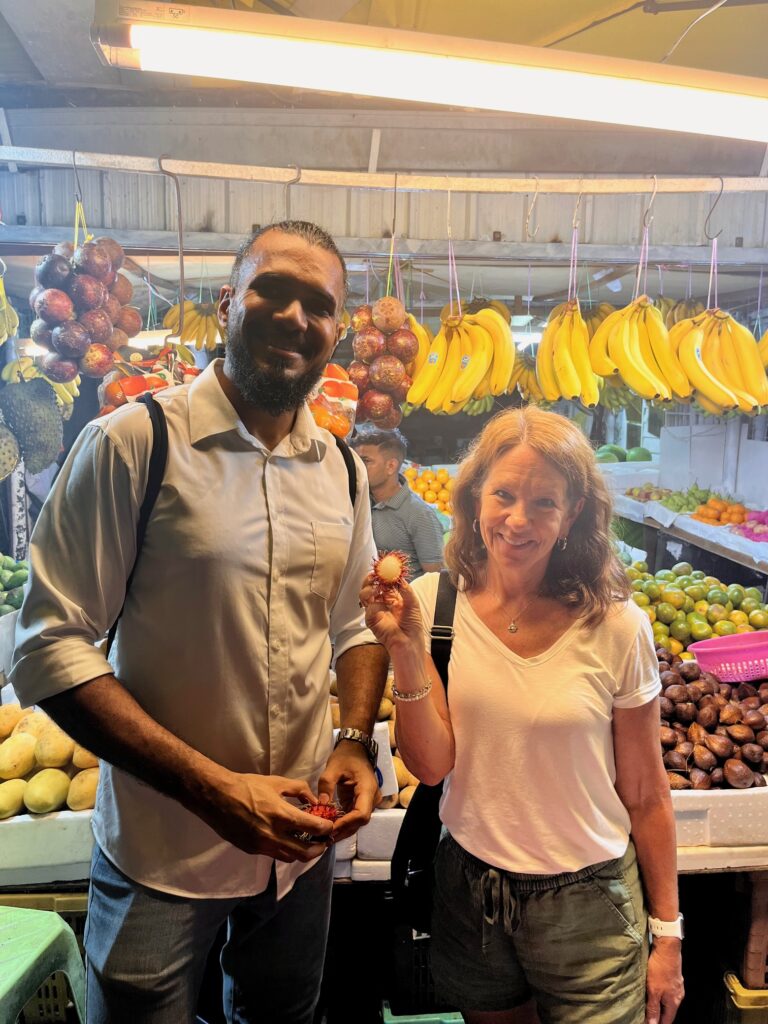
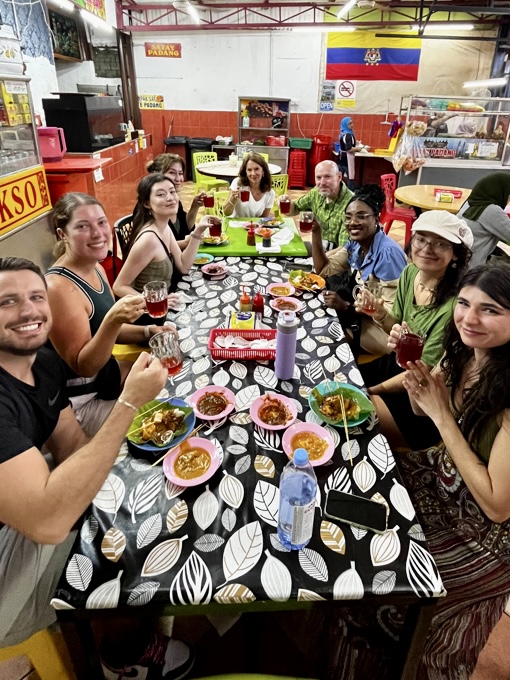
One of the best parts of the night was just wandering the streets our guide, Adil, who clearly knew this neighborhood like the back of his hand. He seemed to know half the vendors by name and had stories for just about every corner we turned. On our tour we were joined by fellow food-lovers from Spain, New Zealand, Fiji, and Belgium, which made it feel like a little global dinner party on foot. Over four delicious hours, we sampled more than 20 different bites, sips, and sweets—each one somehow better than the last. Honestly, we probably wouldn’t have found half of them without Adil leading the way. Here are some of the favorites:
Nasi Lemak – Often called Malaysia’s national dish, this coconut rice meal is a staple. Served with spicy sambal (chili paste), roasted peanuts, hard-boiled egg, and cucumber, it’s rich and savory. We tried a version with fried chicken on our tour—crispy, flavorful, and the perfect balance of spice and crunch.
Satay (Malaysians swear it originated here)– Skewers of grilled, marinated meat—typically chicken or beef—served with a thick, creamy peanut sauce. The charcoal grilling adds a delicious smoky flavor, and the sauce has the right mix of sweet and savory.
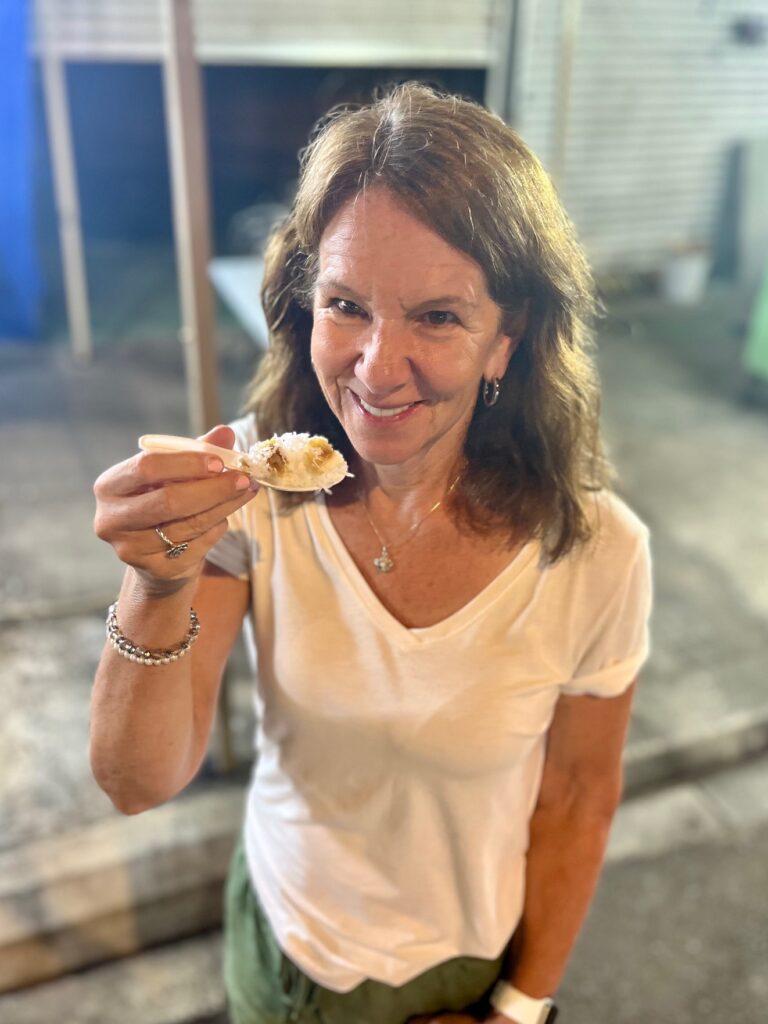
Kaya Pancake Balls – A delightful surprise! These small, round pancakes are filled with kaya, a sweet, creamy coconut and egg jam that’s a favorite across Malaysia. Slightly crispy on the outside, warm and gooey inside— a standout sweet treat.
Char Kuey Teow – Stir-fried flat rice noodles with prawns, Chinese sausage, egg, and bean sprouts, all cooked over high heat for that signature wok hei (wok-charred aroma). Rich and savory, with a touch of sweetness.
Roti Canai – A flaky, buttery flatbread with Indian roots, typically served with dhal or curry for dipping. It’s chewy, crispy, and addictive—perfect for tearing and sharing.
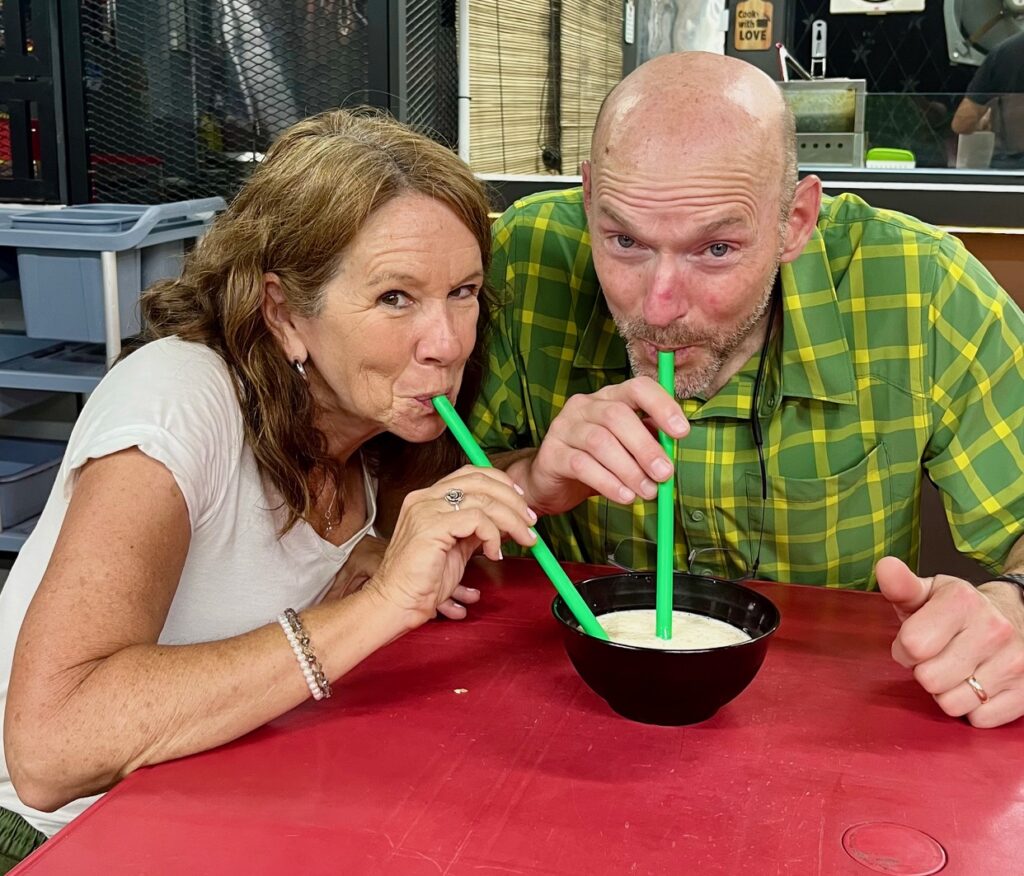
Teh Tarik – Malaysia’s beloved “pulled tea,” made with strong black tea and sweetened condensed milk. It’s frothy, creamy, and so good.
Durian: Love It, Hate It, Smell it from a Mile Away…Controversial Fruit
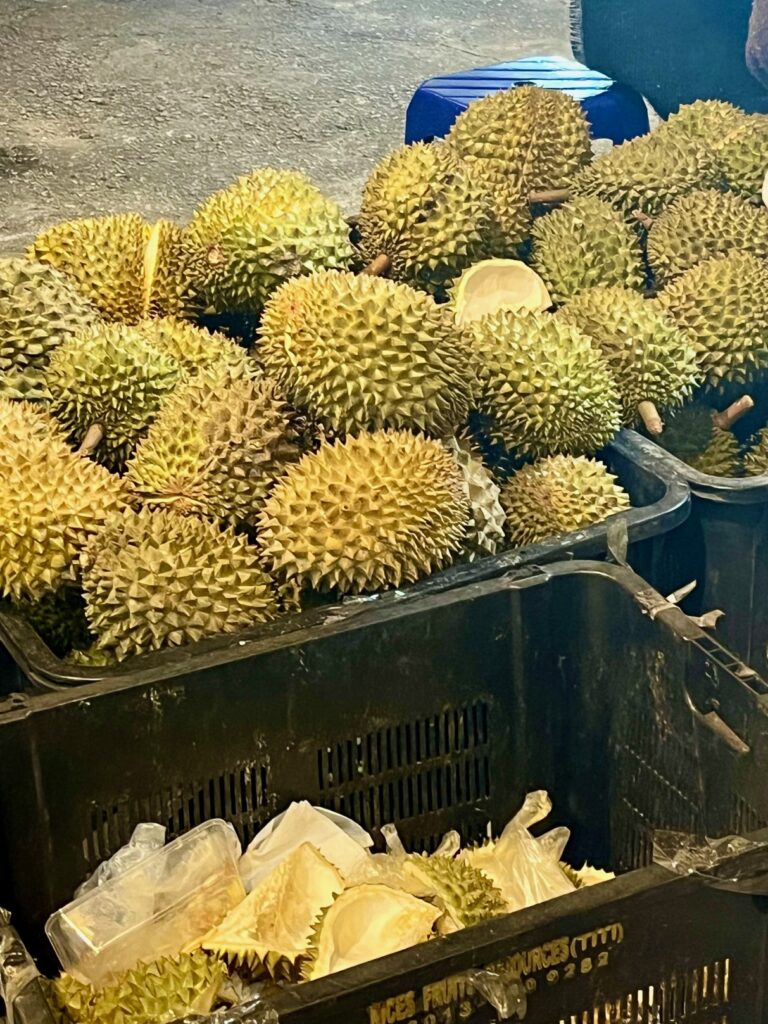
If there’s one fruit that sparks instant reaction across Southeast Asia, it’s durian. Known as the “King of Fruits,” durian is revered by some and reviled by others—there’s almost no middle ground. It carries with it a whole world of drama, debate, and deep cultural pride.
You’ll know a durian before you even see it—thanks to its infamous smell, which has been described as everything from sweet onions to rotten garlic, old gym socks, or fermented cheese. So potent is the scent that durian is banned in most hotels, public transportation systems, and airports across Malaysia, Singapore, and Thailand. You’ll often see signs with a big red X through the spiky fruit at train stations and hotel lobbies. But despite—or maybe because of—its divisive nature, durian has a cult-like following. There are entire restaurants and stalls dedicated solely to durian.
Durian is large and spiky, about the size of a large melon, with a hard outer shell covered in intimidating thorns. Inside, it’s filled with soft, custard-like pods that are pale yellow. The texture is creamy —with a flavor that’s sweet, complex, and completely unlike anything else.
Before our street food tour, I had tried it and I was firmly in the “no thanks” camp. But our guide, Adil, helped strip away some of the drama and explained that a lot of the off-putting taste and odor people associate with durian comes from eating fruit that’s old or overripe. When it’s fresh—ideally only one or two days off the tree—the flavor is far milder, and the smell much less offensive. I gave it another proper try, and while I still wouldn’t say I like durian, I definitely respect it more now—and I can understand why it’s considered such a delicacy and country’s most expensive fruit.