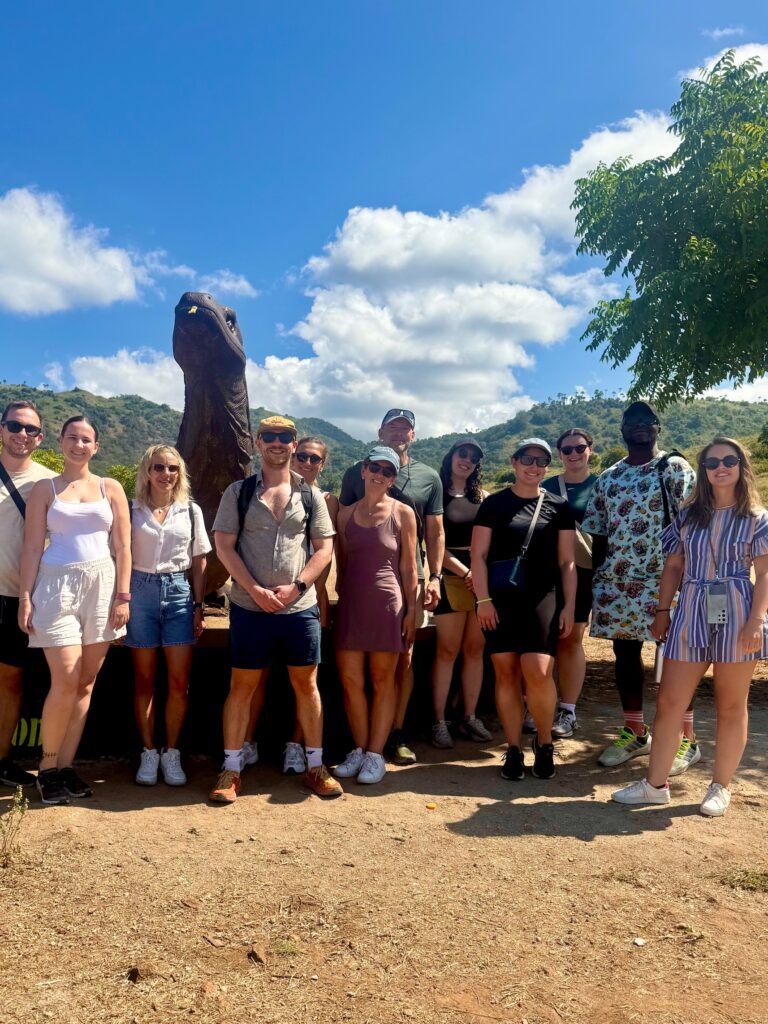
While technically part of Indonesia, Komodo National Park feels like a world away from the beaches and bustle of Bali. Rugged, remote, and untamed, this is the only place on Earth where you can encounter Komodo dragons in the wild—giant, prehistoric lizards that seem pulled from another era. Visiting the park isn’t just about sightseeing; it’s an adventure that demands respect for the landscape and its predator. For obvious reasons, spotting the famed dragons requires a guided trek, ensuring safety, higher chance of finding the prize and a deeper understanding of the creatures and their unique environment.
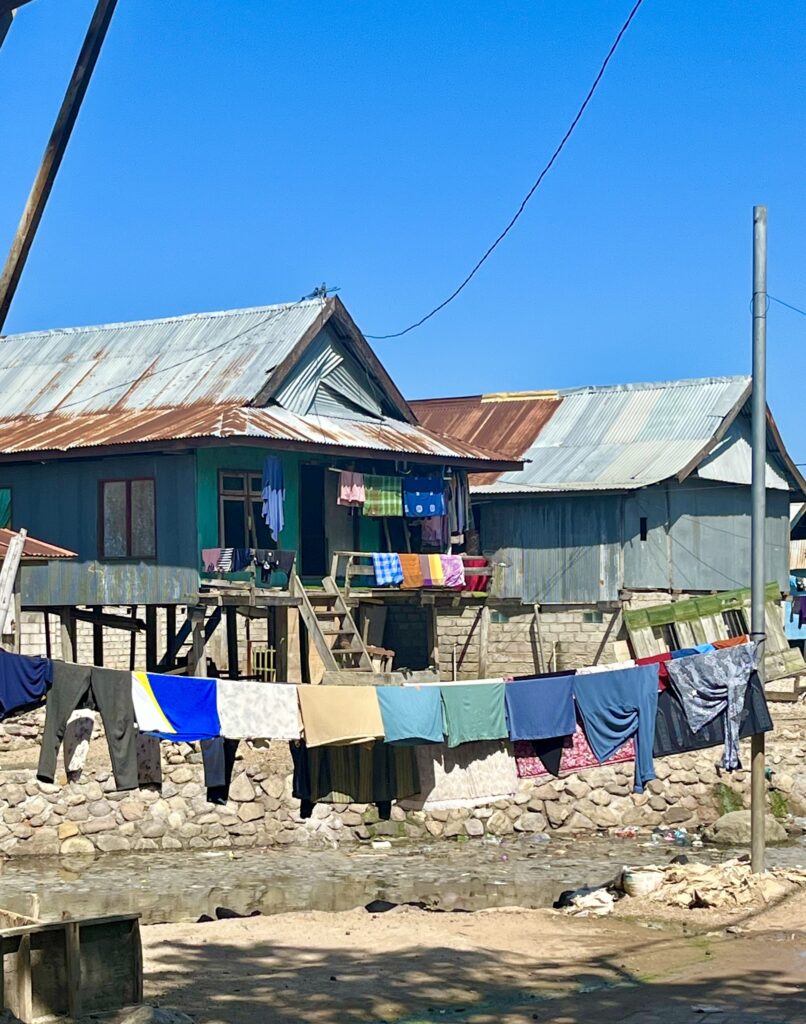
Pulling into Komodo Village Our dragon trek began as we pulled into Komodo Village, a remote seaside settlement of around 2,000 people nestled at the edge of Komodo Island’s wild interior. Life here feels quiet and grounded—wooden stilt houses line dusty paths, and while touristy is loaded with local character. While it may seem remote, the village has become a vital stop for travelers hoping to see the park’s most famous residents: the Komodo dragons.
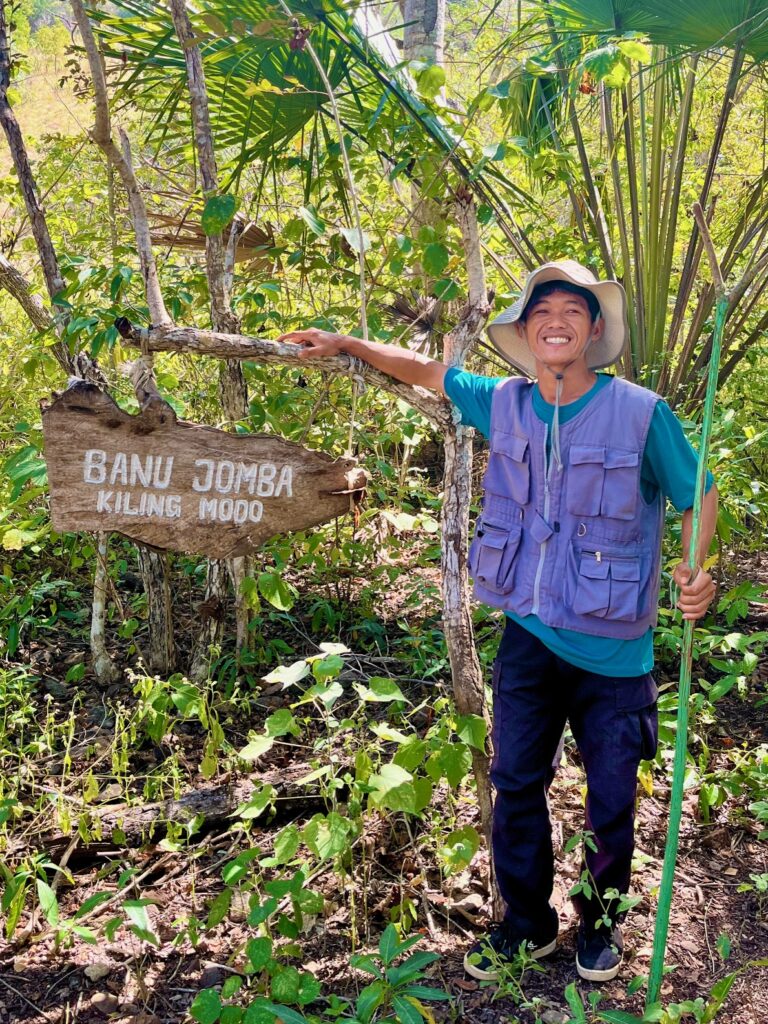
Tourism is the primary industry for the people of Komodo Village. Many locals work as rangers, guides, boat operators, or artisans selling crafts to visitors. It’s a delicate balance—welcoming outsiders while living alongside roughly 1,600 Komodo dragons that also call the island home.
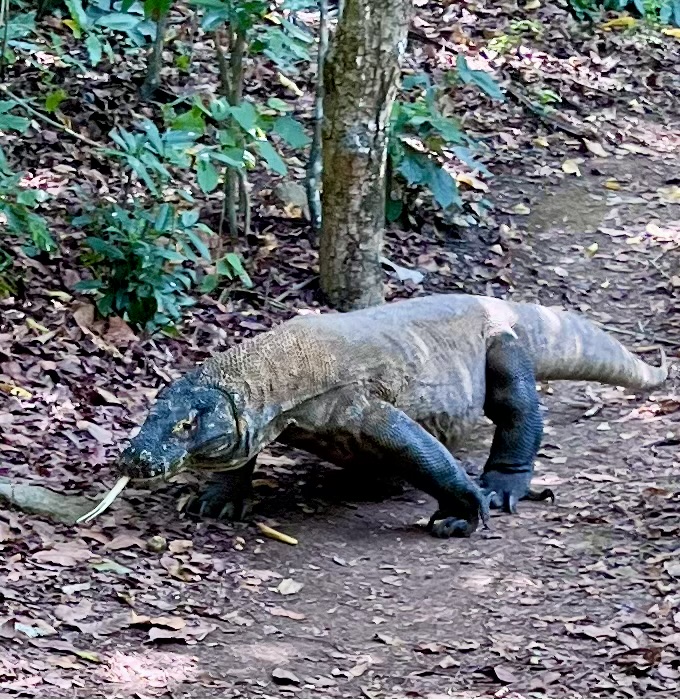
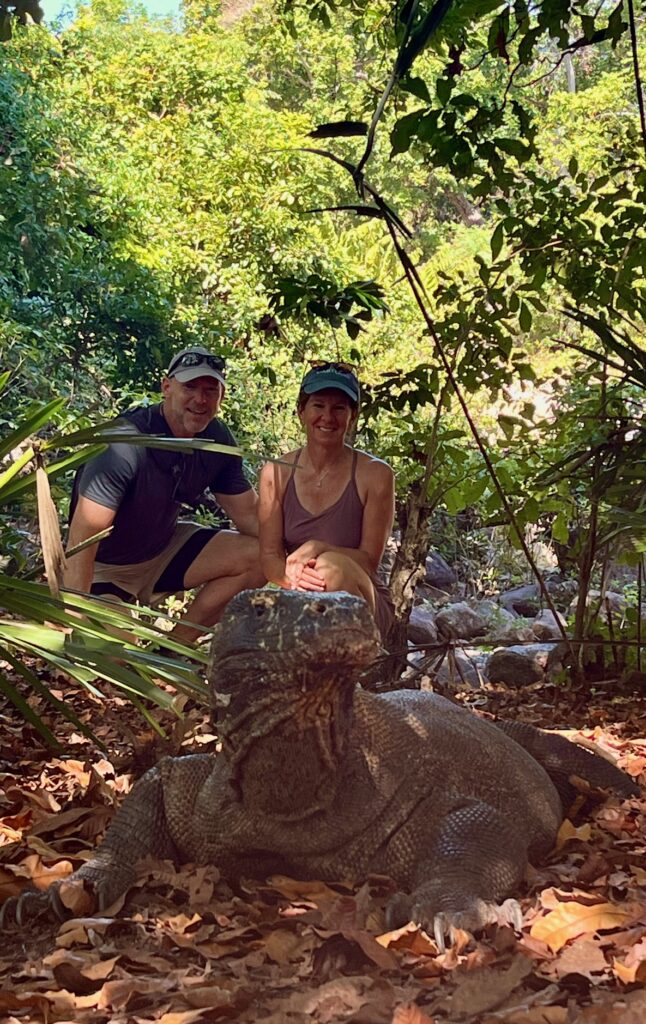
Meet the Dragons I’ve never had a particular obsession with reptiles, but somehow, seeing a Komodo dragon in the wild made its way onto my “that’s a really cool thing to say I’ve done” list. There’s just something about standing a few yards away from a creature that looks like it crawled out of a prehistoric jungle—knowing it exists only here, on this far-flung island. These living dinosaurs can grow up to 10 feet long and weigh more than 150 pounds, moving with a slow swagger that suggests their status as top predator.
They can live 30 years in the wild—and they’re not picky eaters. They feed on deer, wild boar and birds. Adult dragons have been known to eat their own young which is why babies only live in trees for the early part of their lifes. Despite their size, they’re stealthy ambush hunters, using camouflage, patience, and speed (up to 15 mph) to take down prey. And if you think you’re safe in the water—think again. Komodo dragons are strong swimmers, able to cross between islands.
We happened to visit just as mating season was beginning, which made spotting the dragons a little more challenging—our guides warned that many were deeper in the forest. But we got lucky and over the course of our trek, we saw five different adult dragons and even got to see a baby high up in a tree.
Yes, people have been bitten. While attacks are rare, they do happen, usually when visitors get too close. Komodo dragons have a venomous bite that can be serious —not just from the wound itself, but from the toxins that thin the blood and lower blood pressure. The park’s rangers carry long wooden sticks—not as weapons, but as tools to redirect a dragon’s path if it gets too curious. These creatures definitely demand respect and one of those times where you really want to listen to your guide!