In spite of having almost three months for our journey, we have had to make some choices to pass on a few of the big hitters—like Bangkok, Ho Chi Minh City (formerly Siagon). But one tiny (or not so tiny) place kept coming up in conversations…Singapore. We’d heard it’s spotless, it’s futuristic, it’s expensive, and oh you can’t chew gum. So we wanted to see it for ourselves.
Much of what we heard was true. The streets are immaculate, the metro runs like clockwork, and it’s a sharp contrast to it’s close neighbors. But there’s more under the surface—you can’t openly challenge the government (or you go to jail), political opposition is tightly controlled, and you’re almost always on camera. It’s a place where freedom comes with boundaries, and order is non-negotiable. Yet somehow, it works. Despite the strict rules, Singapore doesn’t feel oppressive—it feels efficient, safe, and surprisingly relaxed. Maybe it’s the shared sense of trust that things will just work. Or maybe it’s that the people here seem to know the deal—and they’re okay with it. Whatever the formula is, Singapore has managed to create something impressive in a very short period of time.
A Country the Size of a City, With the Power of a Nation
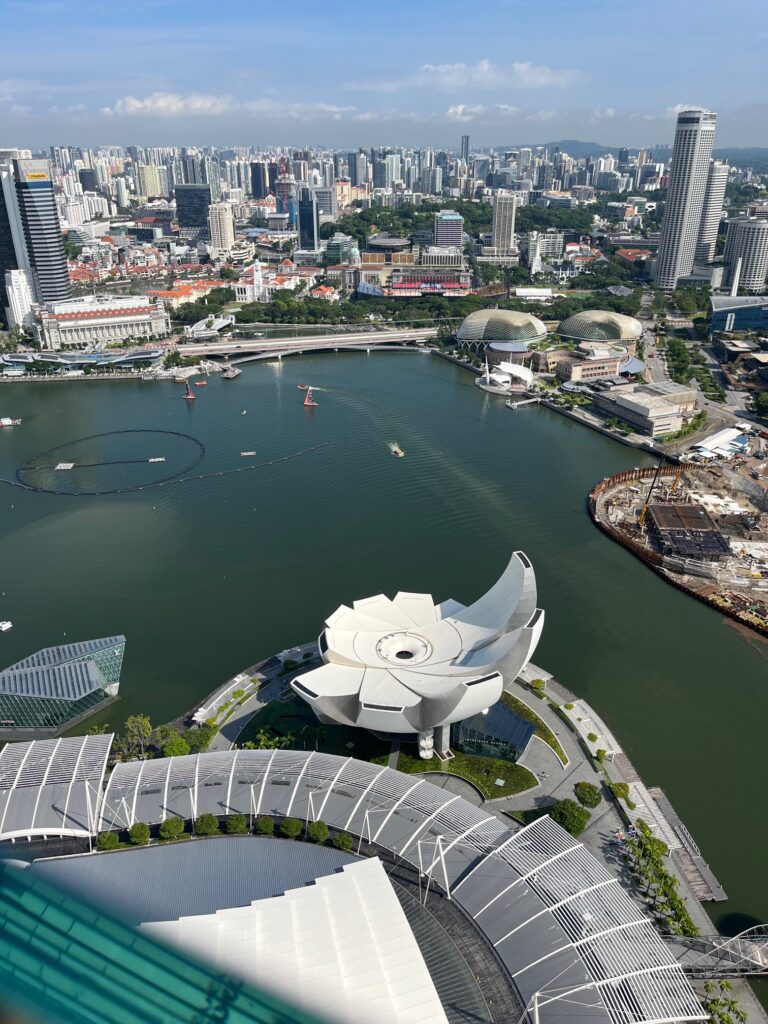
First, let’s talk size. Singapore is both a city and a country, squeezed onto the tip of the Malay Peninsula. At just 281 square miles, it’s about the size of New York City, or for a different visual—you could drive across it in under an hour. But don’t let the small size fool you. This tiny island is one of the wealthiest countries in the world, and a global powerhouse in finance, shipping, technology, and innovation. The skyline gleams with ambition, and its airport ranks among the best on the planet. I was also impressed to learn that Singapore has the strongest passport in the world which means travelers with a Singaporean passport access to 195 destinations without a visa.
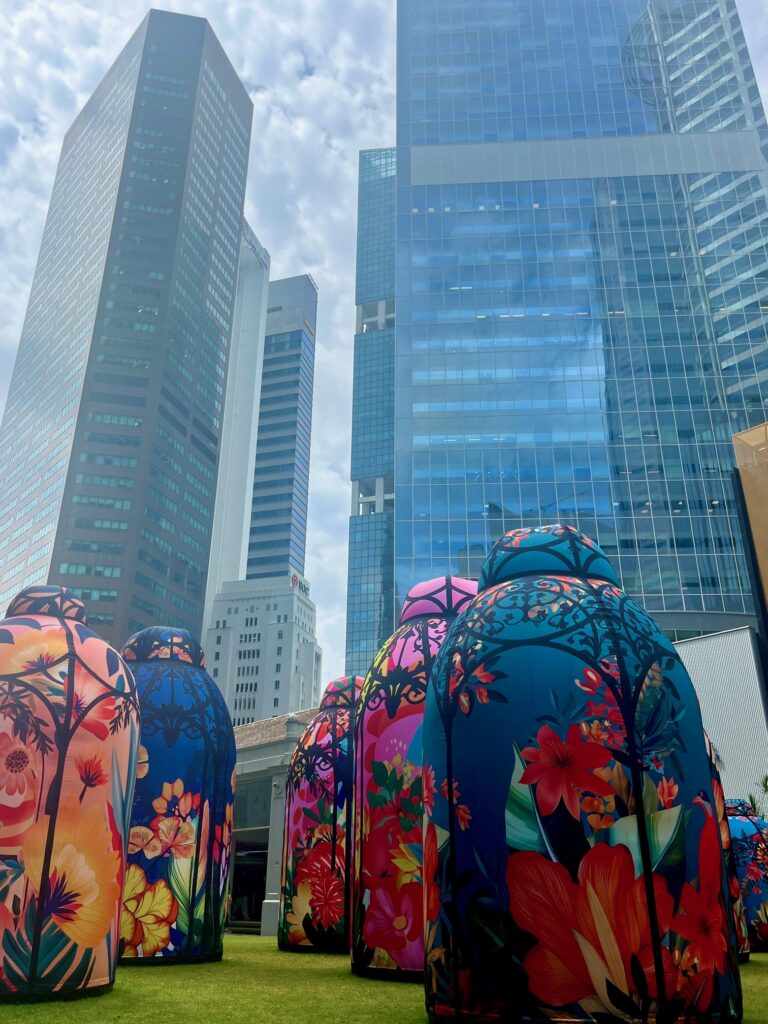
Beautiful displays tucked in between office buildings
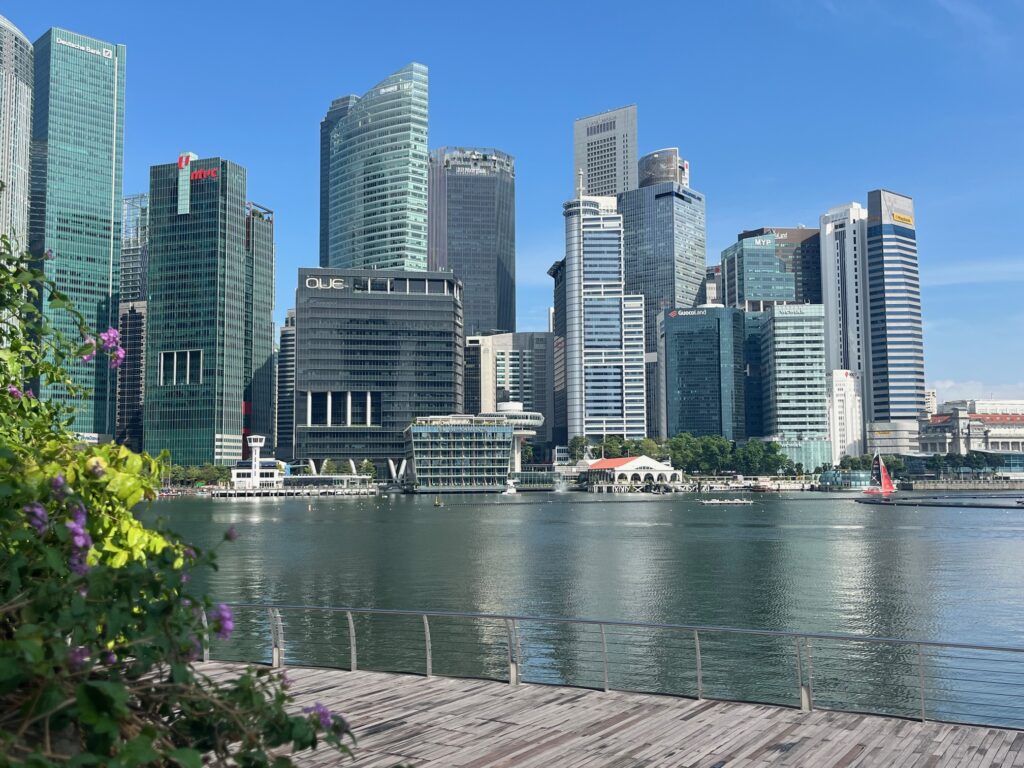
Skyline of the city - a who's who of top financial companies
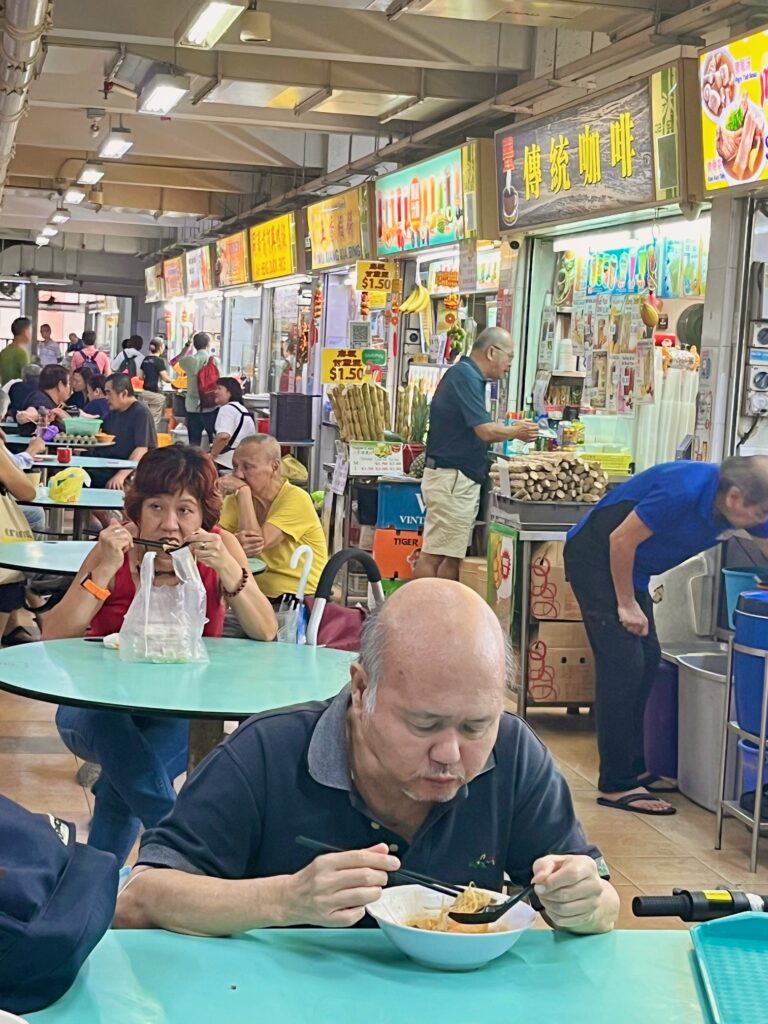
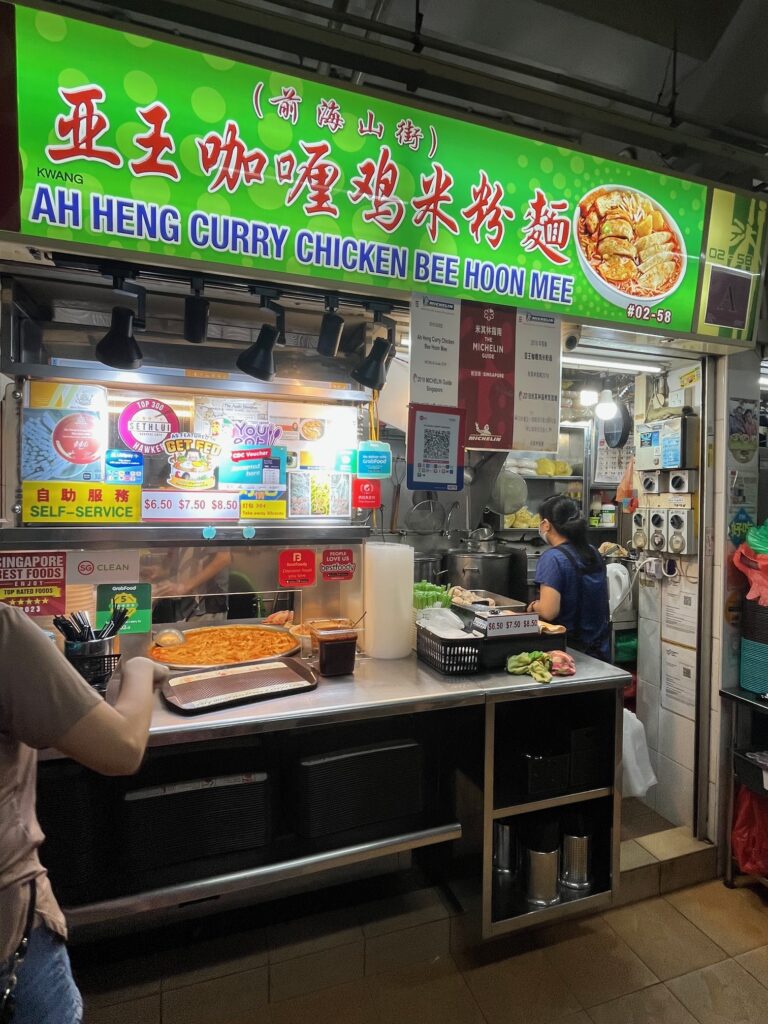
Singapore doesn't allow street vendors, but instead there are "hawker" markets of food courts with dozens of vendors.
From Swamp to Superpower: Singapore’s Radical Transformation
It’s easy to look at Singapore today and forget that just 60 years ago, much of it was literal swamp and jungle. When Singapore gained independence in 1965, it wasn’t just starting from scratch—it was starting from serious disadvantage. Back then, Singapore faced widespread poverty, with many people living in slums or overcrowded tenements, civil unrest and no natural resources. But under the leadership of Lee Kuan Yew, Singapore launched one of the most ambitious nation-building projects in modern history:
Massive public housing projects, giving nearly every citizen a clean, safe home
World-class education and English-language training, to compete globally
Zero tolerance for corruption and strict social controls
Attracting foreign investment through low taxes and political stability
We took a local tour with a native who lived through the transformation. He shared stories of his family’s poverty and living conditions…actually visiting the building and seeing pictures of horrible living conditions. So while tt wasn’t always democratic, it was wildly effective. In just a few decades, Singapore transformed from a struggling port city to one of the world’s most prosperous, organized, and influential countries.
Sticker Shock: When Southeast Asia Meets First-World Prices
After weeks of enjoying $2 pha in Vietnam and $5 dinners in Thailand, arriving in Singapore felt a bit too much like home—our wallets definitely noticed. Dinner out easily ran 4x the cost of what we had gotten used to. But understandable given that 90% of goods are imported.
But what we found really wild is car ownership. In Singapore, it’s not just about buying a car—it’s about earning the right to own one. A mandatory Certificate of Entitlement can cost over $100,000, and that’s before you even buy the vehicle itself. With taxes and fees, a modest car can easily top $150,000. Needless to say, most locals opt for the subway and explains why in a huge city there are no traffic jams.
Even legendary hawker stalls are under the strictest food safety inspections. Stalls display their health grade ratings, and a few even hold the coveted Michelin star. We grabbed lunch at Bee Hoon Mee—a simple, savory noodle dish that was way more delicious than its $4 price tag suggested. Street food doesn't get much better than this.
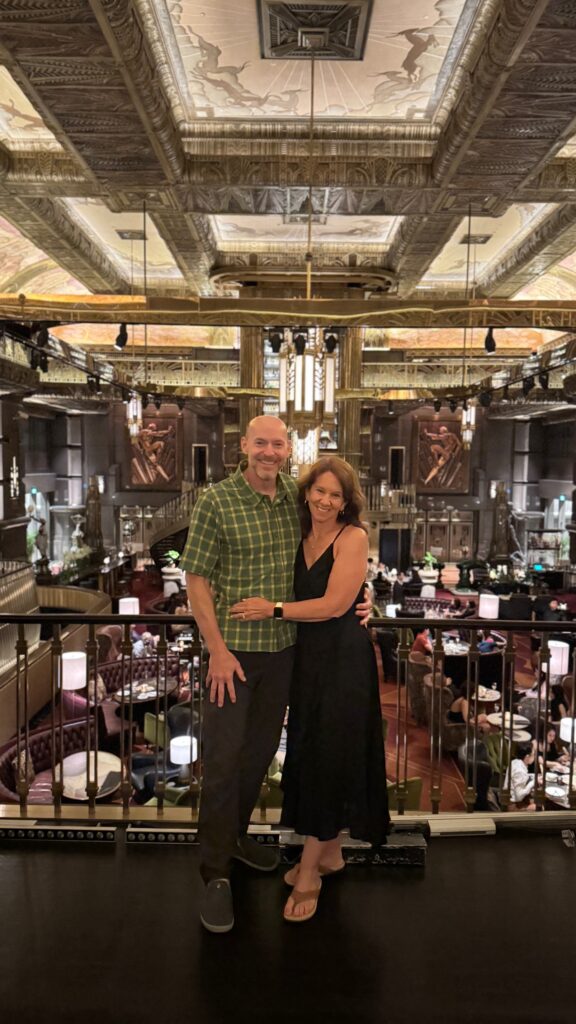
We splurged for a night at Atlas Bar, a glamorous, Art Deco dream. Known for its towering gin collection and jaw-dropping interior, Atlas ranks among the World’s 50 Best Bars...amazing experience.